

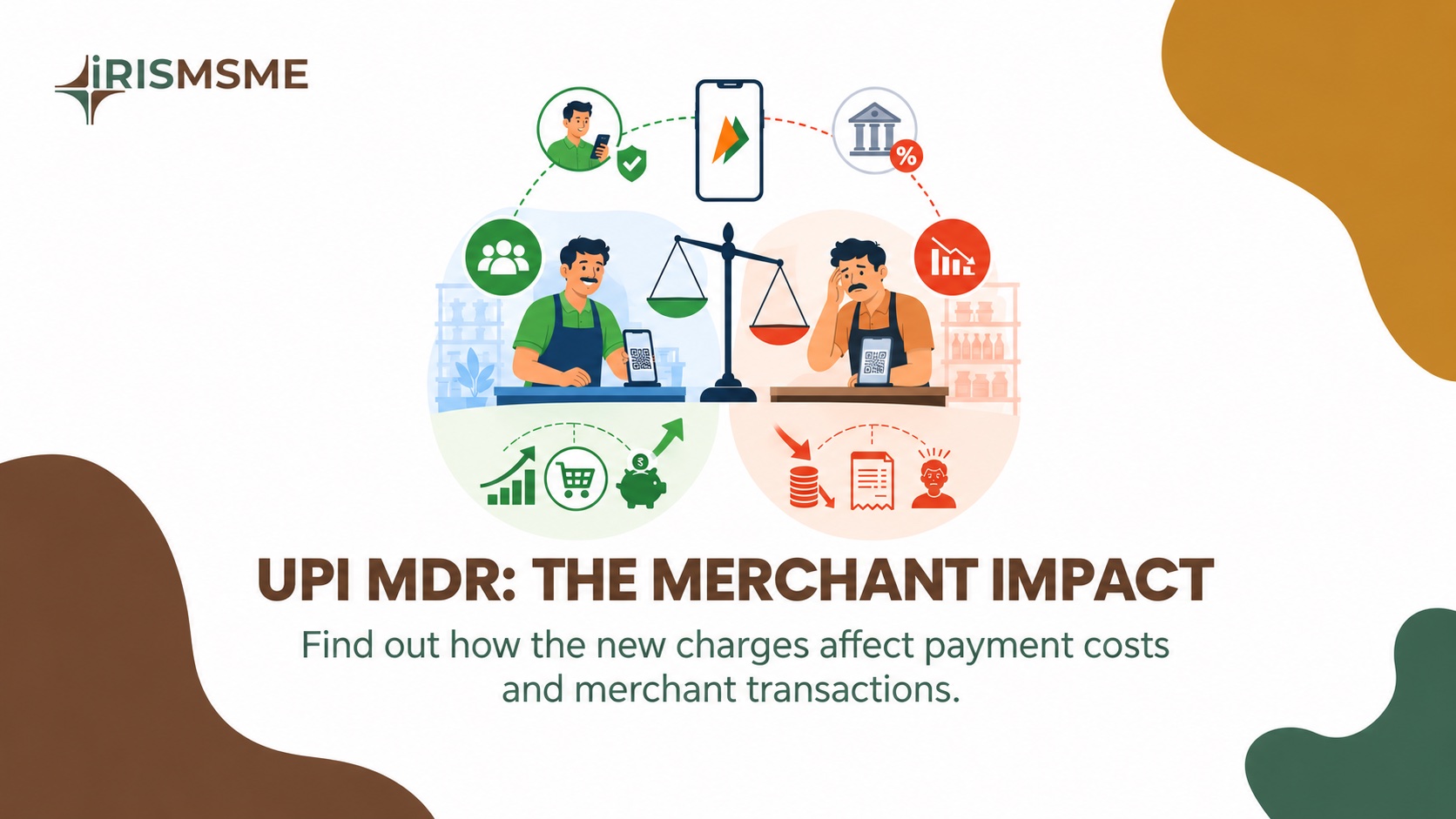
From local kirana stores to busy electronics shops, UPI has become a regular part of everyday shopping in India. Customers scan a QR code, pay directly from their bank accounts and complete purchases within seconds. For shopkeepers, accepting digital payments has become a familiar part of serving customers.
However, proposed changes to UPI transaction charges have raised questions about the cost of accepting digital payments. The Merchant Discount Rate (MDR) framework has drawn attention to how these charges could apply to different merchant categories and transaction values. With the implementation timeline still to be confirmed, merchants need to understand what the proposal involves.
Let’s dive into the proposed UPI MDR changes, what they could mean for shops and merchants, and the key details to know as the policy develops.
Understanding UPI MDR Charges
Merchant Discount Rate (MDR) is the fee charged for processing a digital payment. Under the proposed UPI framework, it would apply to specified merchant transactions, with exemptions for person-to-person transfers and eligible small merchants.
The fee structure depends on the transaction value and merchant category. The key points are:
- Person-to-Person (P2P) Payments: Transfers between individuals remain free, regardless of the amount.
- Merchant Payments Up to ₹2,000: These payments are exempt from MDR across merchant categories.
- Small Merchant Exemption: Eligible small merchants under the P2PM category, receiving up to ₹1 lakh per month through UPI QR codes, remain exempt regardless of transaction value.
- Other Eligible Merchant Payments: A proposed MDR of 0.4% applies to specified person-to-merchant (P2M) transactions above ₹2,000, capped at ₹300 per transaction for payments of ₹75,000 or more.

Rates, Caps and Calculation Examples
The MDR structure uses different rates and fee caps depending on the type and value of a merchant payment. For transactions above ₹2,000, the standard rate is 0.4%. For example, a customer purchasing electronics worth ₹3,500 would attract an MDR of ₹14. For higher-value payments, the maximum cap limits the fee. A transaction of ₹1,00,000 would result in a calculated charge of ₹400, but the cap brings it down to ₹300 for payments of ₹75,000 or more.
Certain essential sector transactions follow concessional rates. Payments for fuel, telecom services, railway bookings, insurance and agricultural inputs carry a flat MDR of ₹5 per transaction above ₹2,000. For a ₹10,000 payment in one of these categories, the fee would be ₹5. Capital market transactions, including payments related to mutual funds, securities, Dealers and stockbroking, follow a separate rate of 0.02%, subject to a maximum of ₹300 per transaction. At this rate, a payment of ₹10,000 would attract an MDR of ₹2.
The applicable rate and fee cap determine the final charge for each category. With the rollout now scheduled for after Diwali, these figures reflect the announced framework; the revised implementation date is yet to be confirmed.

How Will UPI MDR Affect Small Shopkeepers and Retailers?
For small retailers, payment charges can influence the cost of accepting digital payments, particularly when transaction volumes are high. The proposed UPI MDR framework takes merchant categories and payment values into account, creating different terms for small shops and larger establishments. Here is how these differences could affect merchants.
Small Shops and Kirana Stores
The exemptions are particularly relevant for neighbourhood shops, street vendors and small retailers. Payments up to ₹2,000 remain exempt from MDR across merchant categories. Small merchants under the P2PM category, receiving up to ₹1 lakh per month through UPI QR codes, are also exempt across transaction values. For merchants who meet these conditions, accepting UPI payments would not attract MDR under the announced framework.
UPI Charges Compared with Card Payments
For merchants outside the exemption categories, the proposed fee adds a cost to certain higher-value UPI payments. Card payments also carry processing fees, which vary by card type, merchant category and payment provider. The announced UPI rate of 0.4%, with a ₹300 cap for transactions of ₹75,000 or more, gives merchants another fee structure to consider when comparing payment methods. The final cost depends on the terms offered by their payment provider.
Can Merchants Pass the Charge to Customers?
The proposed framework places the MDR cost within the merchant payment ecosystem than making it a separate charge for customers. Merchants should not add a distinct UPI MDR fee to a customer’s bill. This is an important consideration for retailers who want to understand how the change could affect payment costs without altering the price displayed to shoppers.

Managing Merchant Payment Costs
Merchants can assess how the proposed MDR structure could affect their payment expenses by reviewing their transaction patterns and confirming their account category with their acquiring bank or QR payment provider.
- Review High-Value Payments: Examine how many daily UPI collections exceed ₹2,000 to estimate which transactions could attract charges under the announced framework.
- Confirm Merchant Classification: Check your account category with your bank or QR provider to understand whether your shop qualifies for the small-merchant exemption.
The Road Ahead for UPI Payments

UPI continues to play an important role in India’s shift towards digital payments. For merchants, understanding the cost of accepting different payment methods is part of managing daily sales and expenses. The proposed MDR framework brings this aspect into focus, highlighting the need to balance customer convenience with the cost of receiving digital payments.


