

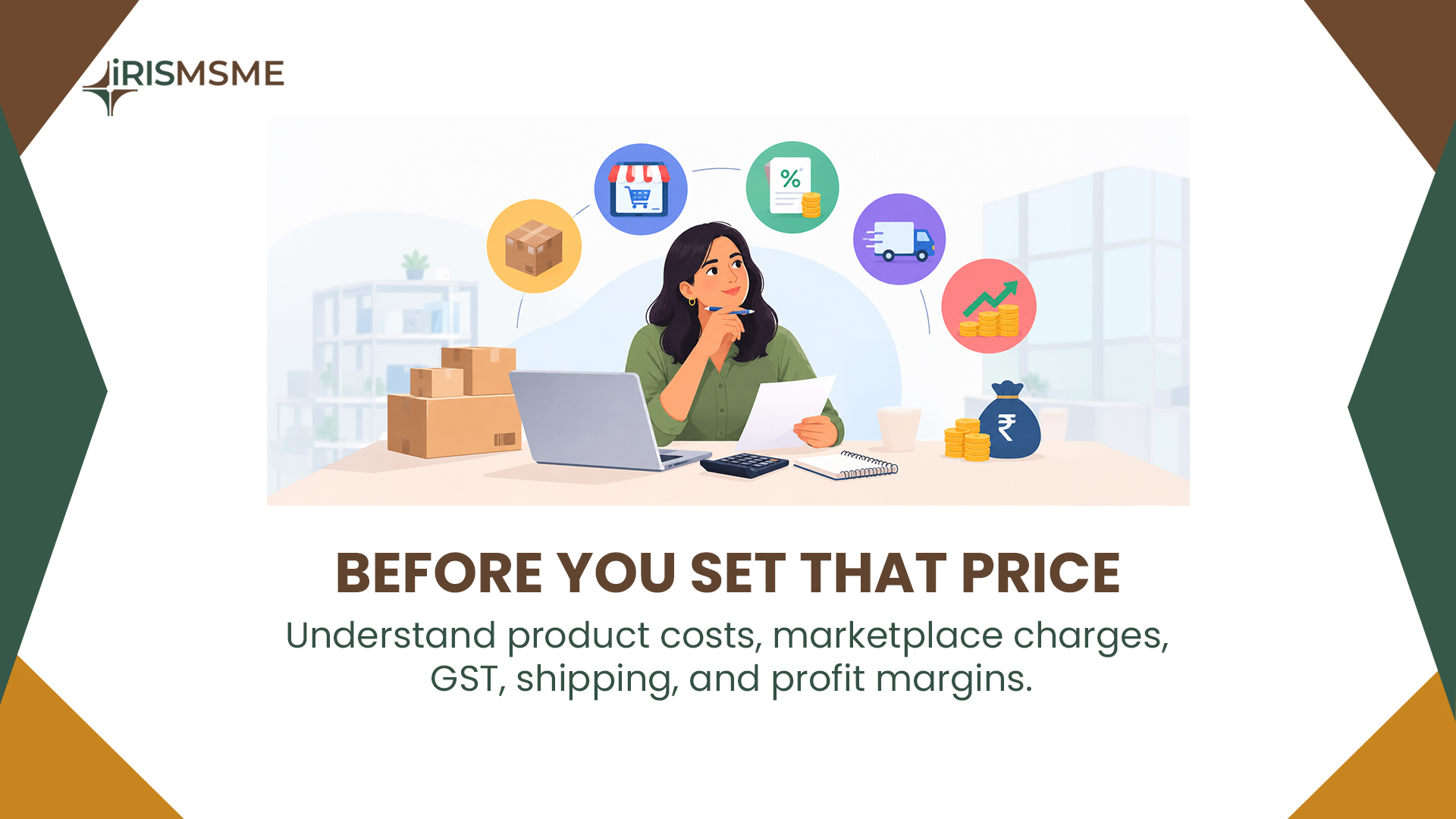
A product that costs ₹300 to source or manufacture cannot simply be listed at ₹400 and treated as a profitable sale. Marketplace fees, packaging, shipping charges, and GST all influence how much the seller earns from each order. Without accounting for these costs, even a product that sells well can bring in less profit than expected.
For businesses selling through online marketplaces, setting the right price involves balancing costs, customer expectations, and profit margins. A price that is too high can make a product less attractive to buyers, while a price that is too low can leave little room for profit after expenses are deducted.
So, how do you arrive at a selling price that works for your business? Start by breaking down the costs involved, understanding how GST applies to your sales and related expenses, and calculating the profit left after each deduction. Let’s look at how these factors help you set the right price for your products.
How to Calculate Your Selling Price
Before deciding what customers should pay, start with the cost of selling each product. The price you pay to source or manufacture it is only one part of the calculation. Packaging, shipping, marketplace fees, and other charges also need to be accounted for.
In the selling price, total fixed costs include the product cost, packaging, shipping, and fixed per-order fees. Percentage-based fees include marketplace commissions, payment processing charges, and any other applicable fees calculated as a percentage of the selling price. Enter these percentages as decimals in the formula. For example, 15% becomes 0.15.
Once you have the price before GST, account for GST based on whether your listed price includes or excludes it.
What Goes Into the Calculation?
- Base Cost: The amount spent on purchasing or manufacturing each product, including raw materials where relevant.
- Packaging and Handling: The cost of packing materials, boxes, tape, and labour involved in preparing an order.
- Shipping Charges: The amount you pay to deliver the product to the customer.
- Fixed Marketplace Fees: Per-order charges that apply to your seller account or product category.
- Marketplace Commission: The percentage charged on a sale, based on the applicable marketplace fee structure.
- Target Profit Margin: The share of the selling price you want to retain as profit after accounting for the costs included in your calculation.
- GST: The applicable tax rate on the product. GST treatment of marketplace fees and other expenses should also be considered separately.
Put the Formula Into Practice
An online selling price calculator can help you compare different pricing options before listing a product. Use the formula as a starting point, then account for the actual fee structure, GST treatment, and other expenses that apply to your sale.

Note: This formula assumes the commission and profit margin are percentages of the selling price before GST. If other percentage-based charges apply, include them in the denominator too.
Breaking Down Marketplace Fee
Marketplace charges can vary depending on how you sell, the type of product you list, and the services you use. Some fees are linked to the selling price, while others are charged at a fixed rate or depend on how orders are handled. Knowing how these charges are calculated helps you account for them when setting your product price.
Common Marketplace Fees
- Category Commission Fees: A percentage of the sale charged based on the product category. Rates differ across categories such as clothing, electronics, and consumer goods.
- Fixed Order Fees: A fixed charge applied to an order, with the amount depending on the platform’s pricing rules and the order value.
- Payment Processing Fees: Charges for processing customer payments through methods such as credit cards, debit cards, net banking, and UPI, where applicable.
- Fulfilment and Storage Fees: Costs for storing inventory and handling tasks such as picking and packing when you use a marketplace’s fulfilment services.
The amount you pay for each service can differ based on your product category, order value, and fulfillment choice. Keeping these expenses in your calculations helps you work out how much you need to earn from each sale while leaving room for your target profit margin.

GST on Online Sales
GST is another part of product pricing that sellers need to account for. Along with the tax charged on sales, there is GST paid on certain business expenses, which can be claimed as Input Tax Credit (ITC) when eligible.
When you sell a taxable product, you charge GST at the rate applicable to that product. You also pay GST on certain expenses, such as marketplace commissions and shipping services. If these expenses qualify under GST rules, you can claim Input Tax Credit (ITC) to offset your eligible GST liability. This helps prevent the same tax from becoming an additional cost to your business.
Tax Collected at Source (TCS) is another part of GST to consider when selling through e-commerce operators. The platform collects TCS on applicable net taxable sales and deposits it with the government. The amount is reflected in your GST records and can be reconciled when filing returns. TCS is credited to your electronic cash ledger, so it is not an additional marketplace fee.
Keeping sales invoices, expense bills, and GST records organised helps you reconcile the tax collected, credits available, and amount payable. This gives you a clear view of your selling costs when setting product prices.
Shipping and Returns
Shipping costs depend on more than the distance a parcel travels. The product’s weight and dimensions, the delivery location, and the possibility of a return can all add to the total cost of fulfilling an order. Accounting for these expenses helps sellers work out how much each shipment costs and how returns fit into their pricing calculations.
Key Shipping Costs to Consider
Volumetric Weight: Courier charges are often based on either the parcel’s actual weight or its volumetric weight, whichever is higher. Volumetric weight reflects the space a parcel occupies during transit and is calculated using its dimensions.
The divisor can vary by courier, so check the calculation method used by your logistics provider.
Delivery Zones: Shipping rates can differ for local, regional, and national deliveries. A product sent to a nearby customer can cost less to ship than the same product sent across the country. Reviewing your usual order locations helps you estimate delivery costs when setting prices.
Return-to-Origin (RTO) Costs: When a shipment cannot be delivered and returns to the seller, reverse shipping charges can add to the original delivery cost. Customer returns can involve additional expenses, too. Reviewing past return rates and the applicable courier charges helps you account for these costs when calculating your selling price.
Including shipping, delivery, and return expenses in your pricing calculations gives you a more complete view of the cost of fulfilling each order.

Calculating Your Break-Even Price
Before listing a new product, calculate the minimum price you need to charge to cover the costs of selling it. This is your break-even price, where sales revenue covers your total costs, leaving no profit or loss. Knowing this amount gives you a starting point for setting a selling price that also includes your target profit margin.
How to Calculate Your Selling Price
- Add Direct Product Costs: Include the purchase or manufacturing cost, packaging materials, and inward shipping expenses for each unit.
- Account for Percentage-Based Charges: Include marketplace commissions, payment processing fees, and an allowance for expected returns, where applicable.
- Include Fixed Charges: Add per-order marketplace fees and the outward shipping costs you pay.
- Set Your Target Profit Margin: Once you have accounted for these expenses, calculate the selling price needed to cover your costs and achieve your desired margin.
A clear break-even point helps you judge whether a product is worth selling at its current price. If the expected profit falls short of your target, consider adjusting the price or finding ways to reduce costs before listing the product.

Making Every Sale Count
The price you set should reflect both the value customers see in your product and the costs involved in selling it. A competitive price can attract buyers, but the numbers behind it need to leave enough room for a healthy profit margin.
As supplier rates, shipping charges, and marketplace fees change, revisit your pricing to see whether your margins still meet your expectations. Review your costs, check your margins, and fine-tune your prices to give every sale a better chance of contributing to your profits.


